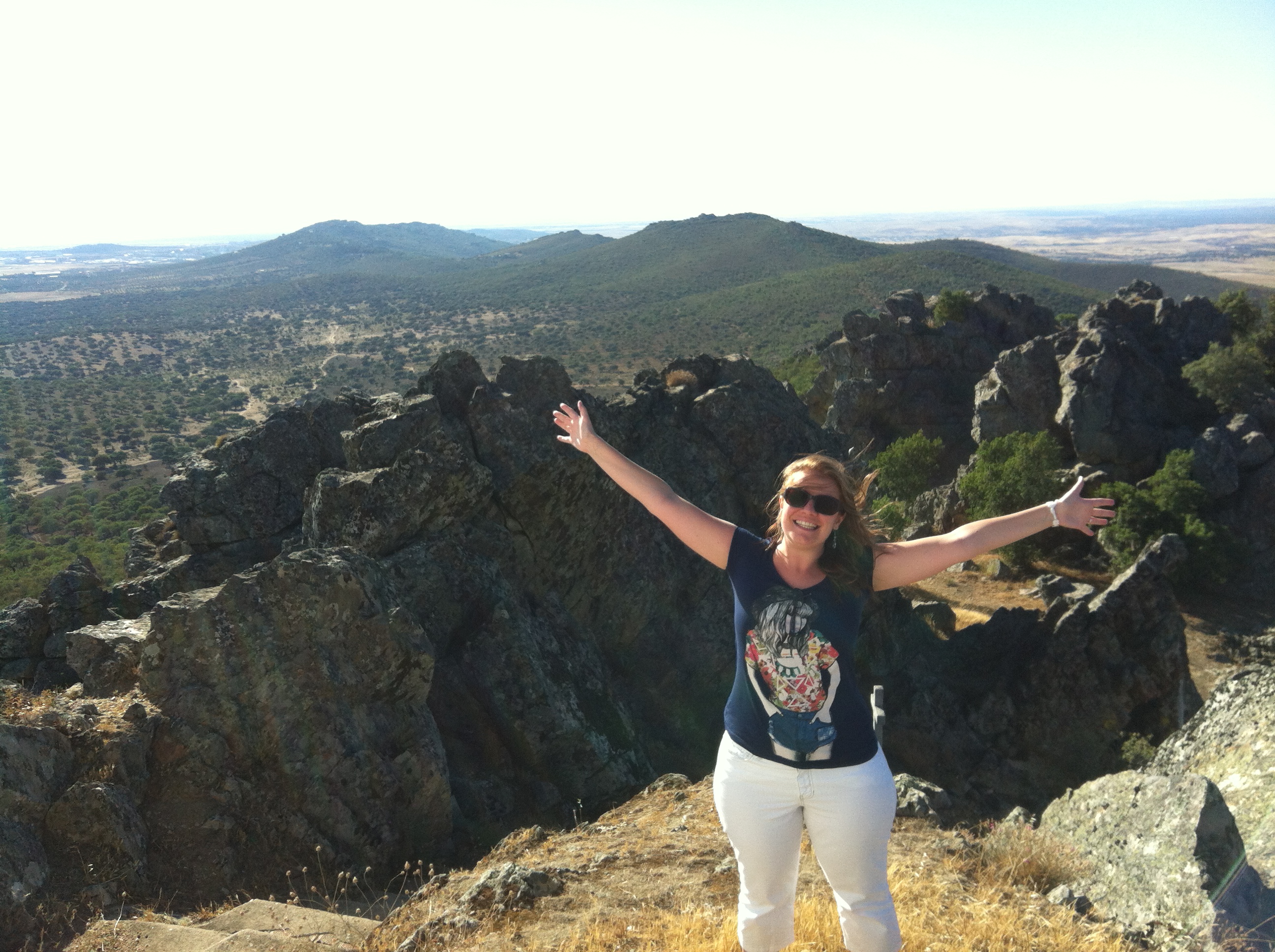
June 27th, 2011
We decided to go on a short road trip to visit the town of Trujillo.
The objective was to go to the top of the town and show Carolina what a real castle looked like.
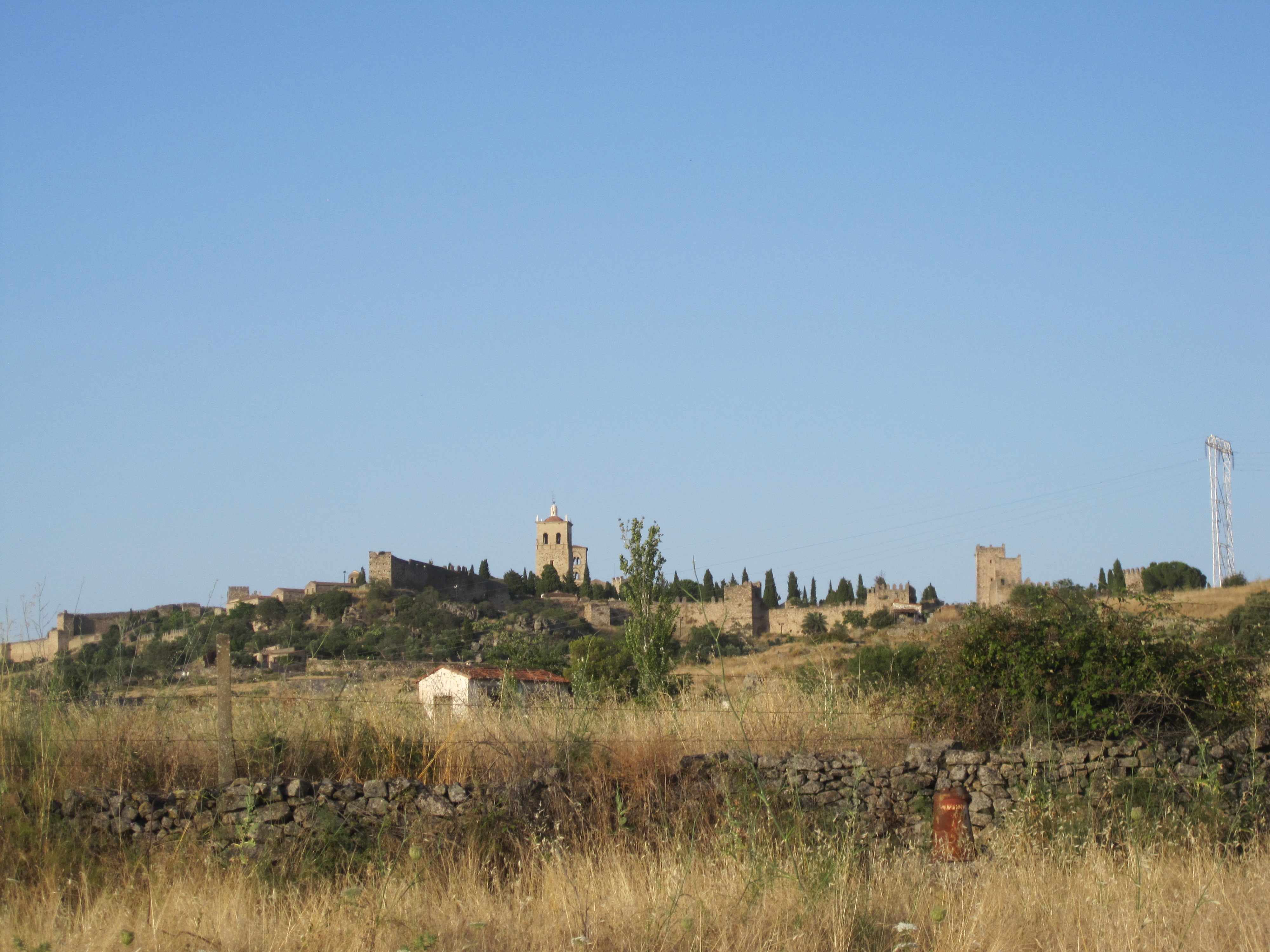
Trujillo is a small town with a population shy of 10k southeast of Caceres. Even though it’s a small town it’s well known for it’s architecture that has a mix of Roman, Christian and Arab influence; as well as being the home town of several historical figures.
We went up the extremely narrow cobblestone streets to get as close as we could to the castle. We ended up parking the car near what’s called the pool house – referring to Roman baths “La Casa de la Alberca” and decided to walk up from there…
As we were walking up the street we arrived to one of my favorite corner mansions.
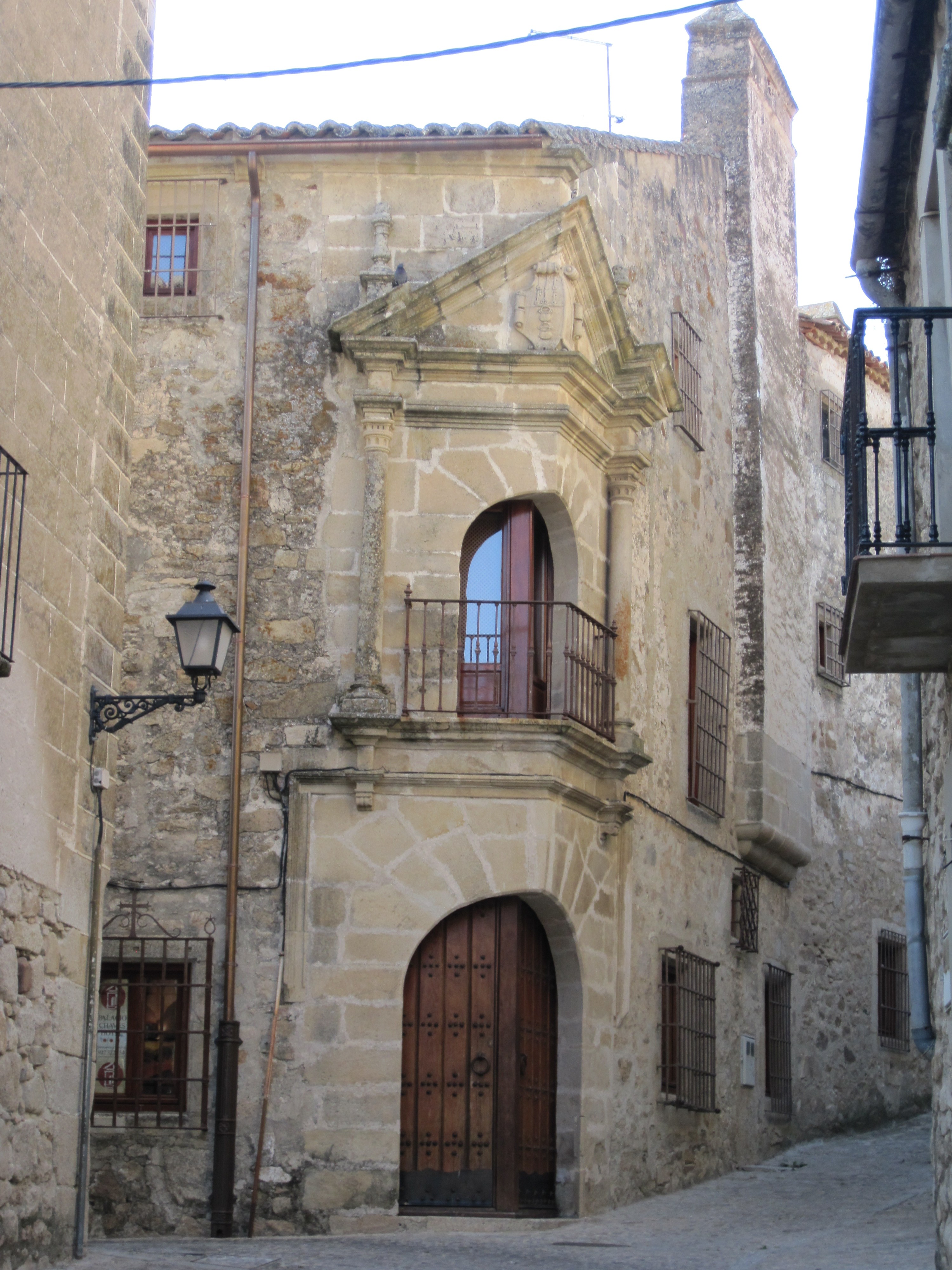 It’s a mansion constructed in 1570 called the “Palacio de Chaves” which has been rehabilitated and is now a really nice hotel.Turning old mansions into hotels is a very common thing in Spain, and makes the tourist stay that much more special.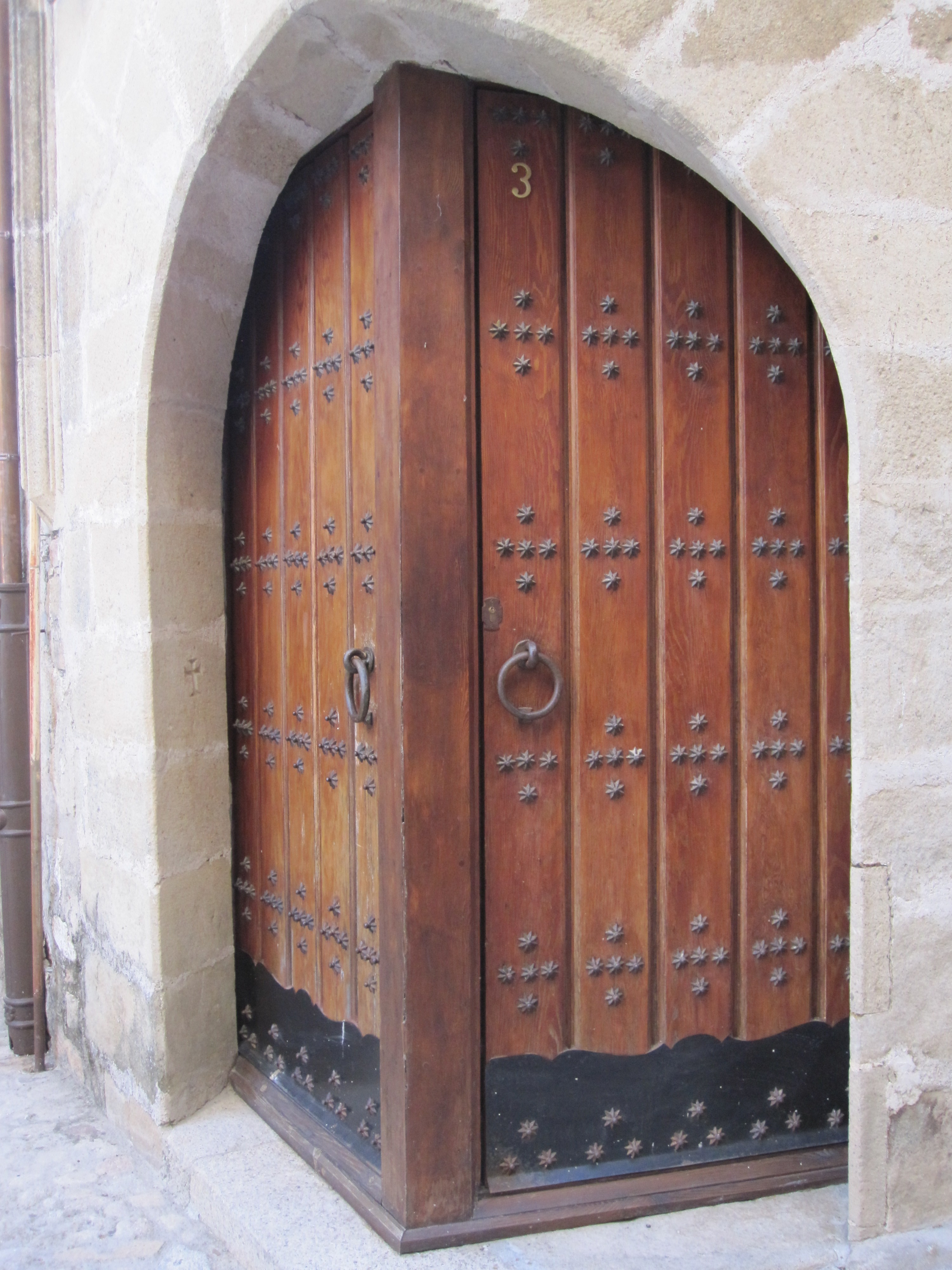
My favorite part in this particular case is the corner doorway made out of nice solid wood.
The inside of the hotel has vaulted ceilings and is filled with very elegant and antique furniture, fit to feel like a princess when you go in… or at least part of the royal family!
We continue to walk around and we reach the house of Orellana, one of the explorer’s I learned about when I was in middle school.
His name: Francisco de Orellana. He was a soldier and the 1st explorer of the Amazon. This year Trujillo celebrates 500 year anniversary.
The photo below shows his house, not sure that you can go in to check it out though…
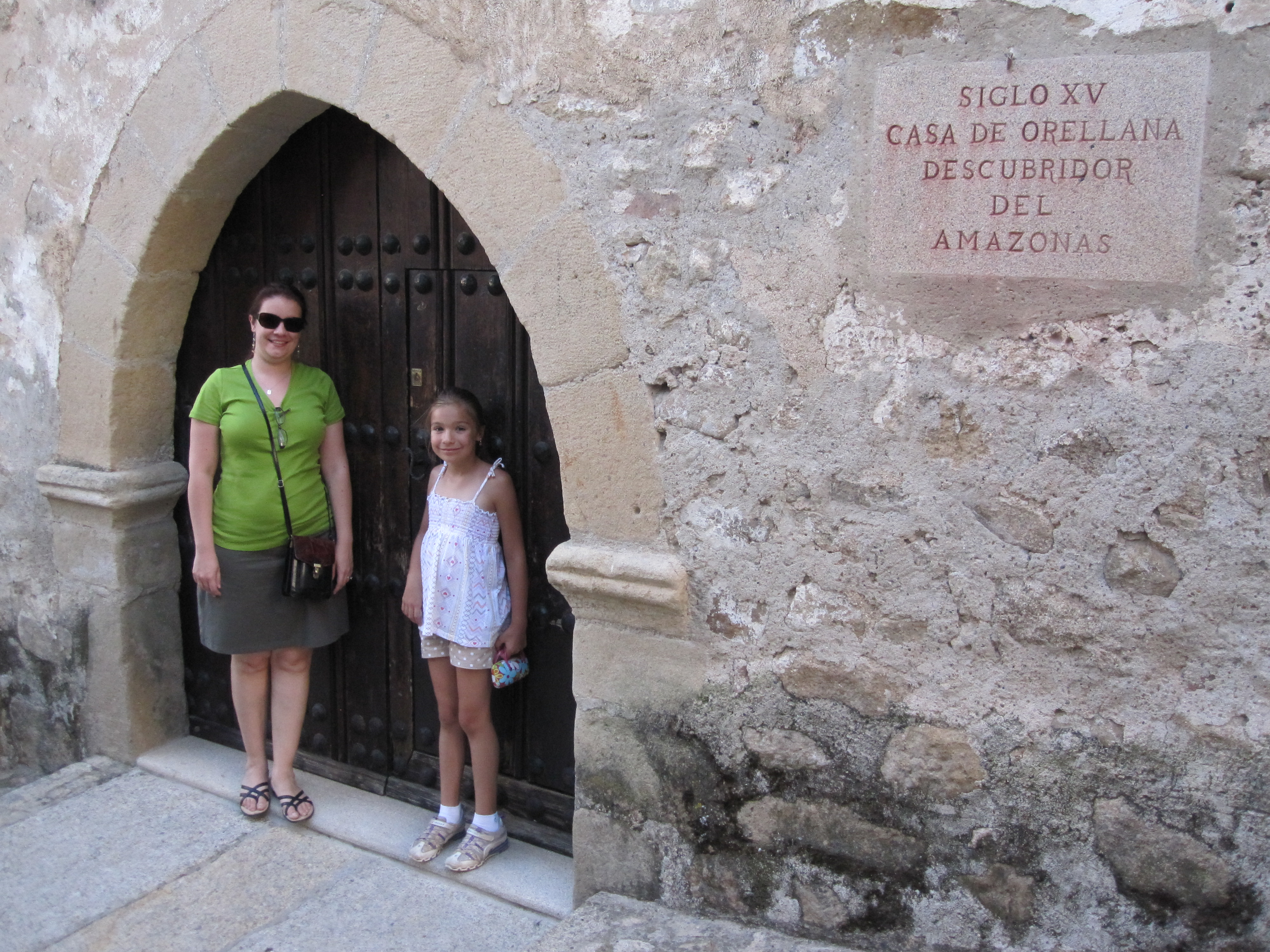
Carolina thought it was funny and interesting that all the doors were so small and wondered if people were just really tiny back in the 15th century. A little further up the street you come to a plaza where you can see a bronze statue in commemoration of Orellana. Maybe statue isn’t quite the word to describe it, as it really is only his head!
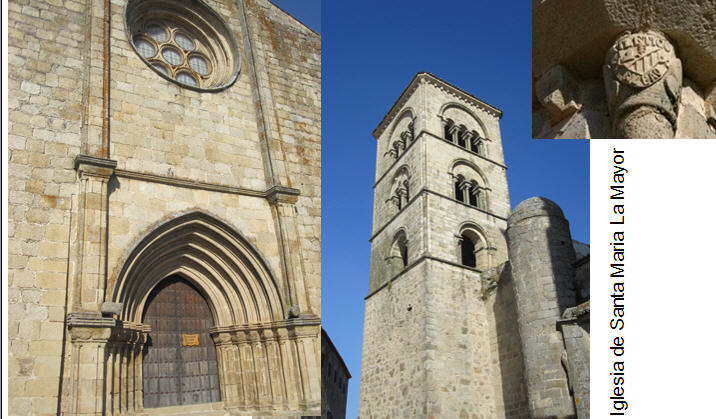
Soon after as we go up yet another hill, we arrive at the “Iglesia de Santa Maria la Mayor”. What’s interesting about this church is that it’s built over the remains of a Muslim mosque and incorporates a Roman tower known as la “Torre Julia” built as a tribute to Caesar.
You can access the church from 3 different doors, the principal and most important one is in the “Plaza de Santa Maria” which has not one but six arches. Above the door you can see the beautiful stained glass Rosetta, which provides a great source of light inside the church.
There are 2 towers of very different architecture. One very plain and the other, which I mentioned above “Torre Julia” where the bell is and that was reconstructed due to some damage it suffered. A small little anecdote: When this tower was reconstructed in the 70s, at the very very top, they put the emblem of the Athletic de Bilbao club de futbol.
We continue our journey up towards the castle, Carolina is amazed to see such big rocks piled up on the streets.
And I don’t mean rocks that have been accumulated in one spot to make a pile; but more like huge rocks being part of the architecture of a building, street, etc.
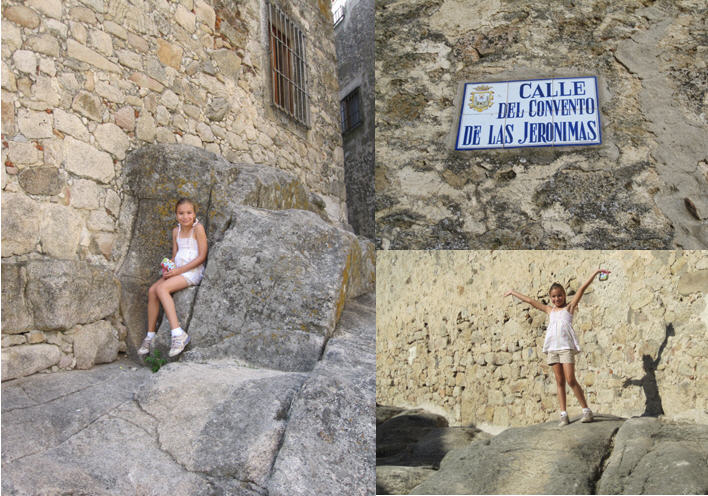
We explain to her that these huge rocks are really granite, like the countertops of our kitchens… which is very abundant in this region.
You can see granite all over the landscape of Extremadura really (not just Trujillo). The mansions of all the Conquistadors were made with this granite when they came back from their travels.
We were now almost getting close to the castle, which is exciting to Carolina. We walk over to a spot where you can see a great view of the land around Trujillo. See collage below to try to give a panoramic view as we were seeing it.
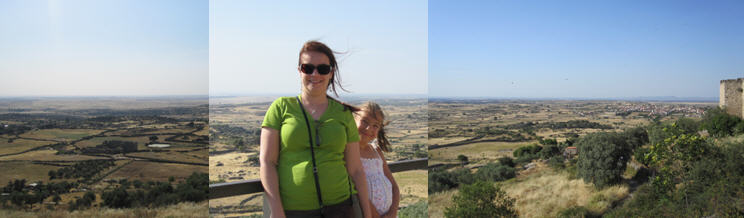 At last we make it up the hill and the castle awaits!
To visit the castle you pay 1.40 Euros/person and then you are free to roam around, at your own risk. I say at your own risk, because you have to be very careful where you step as of course the floor is very uneven made out of blocks of rock, and as you peep through the windows and corners there aren’t any rails, mesh or anything that would stop you from falling…
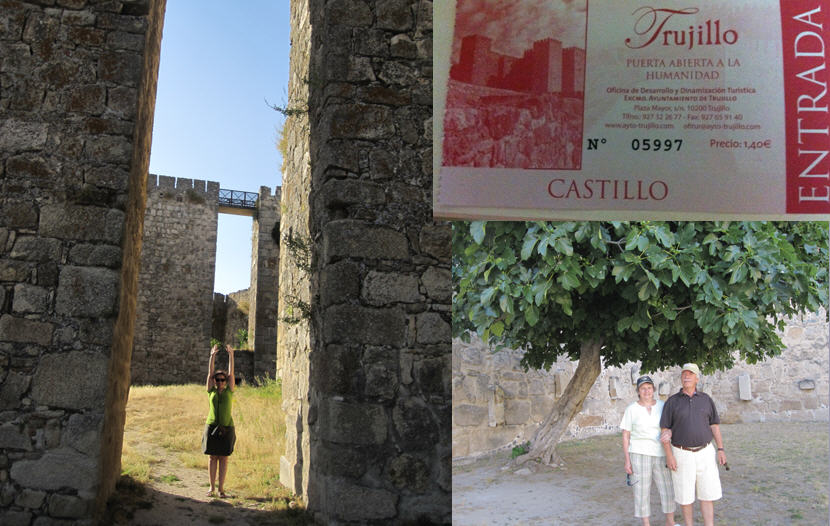
The castle was built in the 13th century on an ancient Moorish fortress of the 9th century. It retains the typical square towers of Islamic architecture built of brick and mortar; you can also tell that some of the ancient roman pillars and stones were used throughout the castle as you can see inscriptions in both Latin and Arab. It’s an interesting mix that’s for sure!
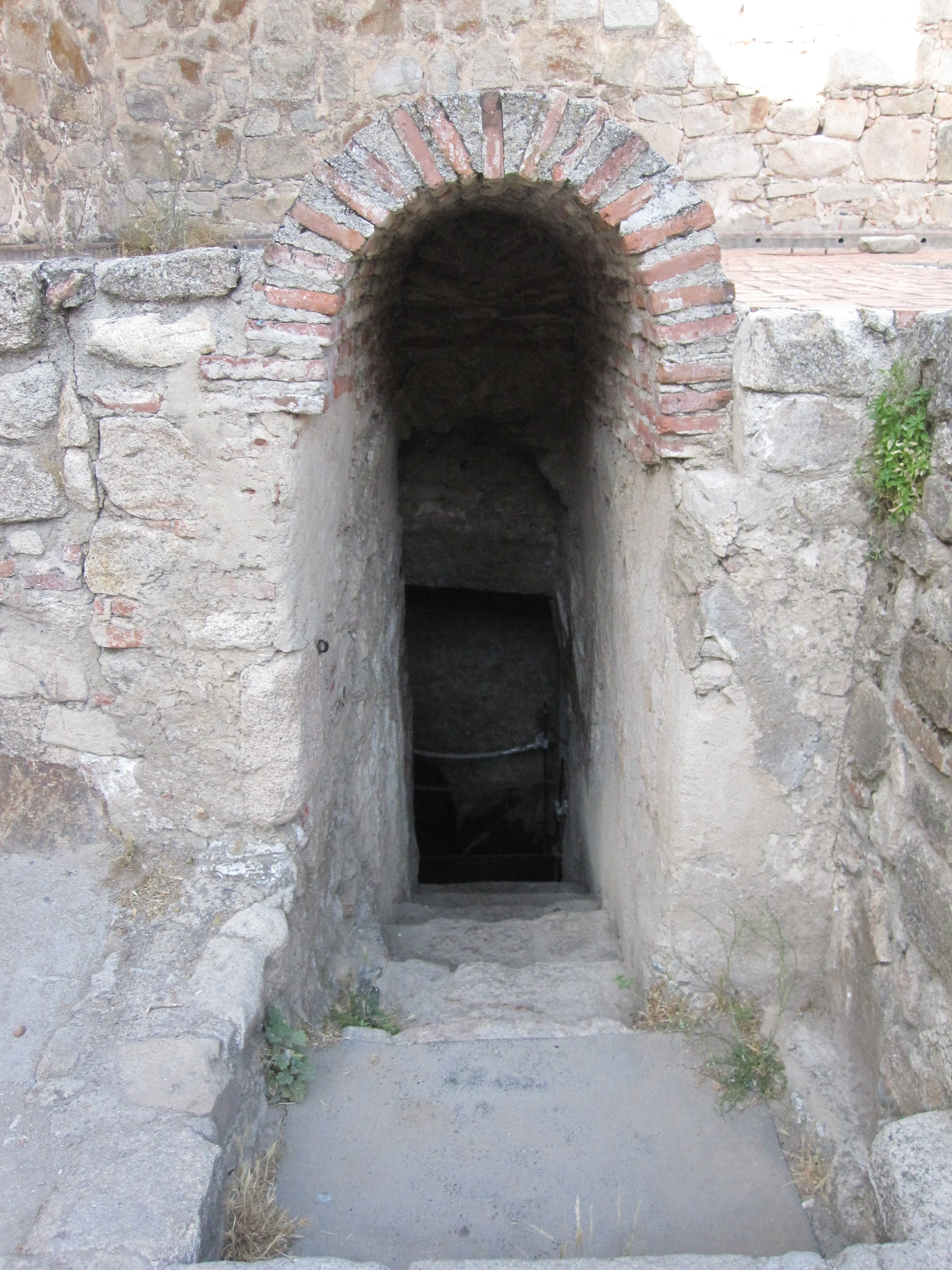 You can visit the “Aljibe” from the main patio by going down some narrow stairs (very carefully) as you can see in the photo on the Left.
An Aljibe was used by the Arabs as a source of water for the inhabitants of the castle.
When you go down you can see different passage ways full with water that people would use to drink from.
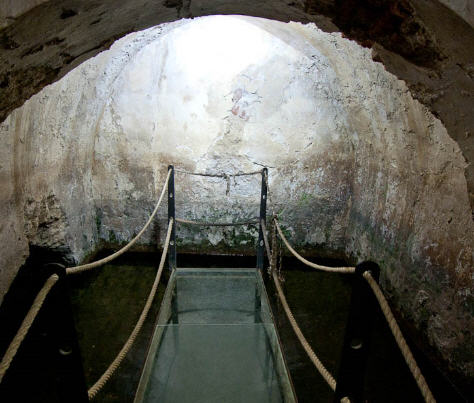
The way it works… There are several points where there were holes, where the water from Rain would fall into these canals underground. They could then use this water for all purposes.
As I explained this to Carolina, she looked down into the water and said “ewwwwww! they drank this water?” I of course had to then explain that this little bridge that we were walking on, didn’t exist back then, it was built so we could go down and check out the Aljibe, so that some of the trash she could see would not have been there, and definitely no coins would be in the water, since aljibes were not wishing wells, as some tourist are treating them. Some tourists, including herself, as she wanted to make a wish.
Some pictures of the views seen from different perspectives in the castle.
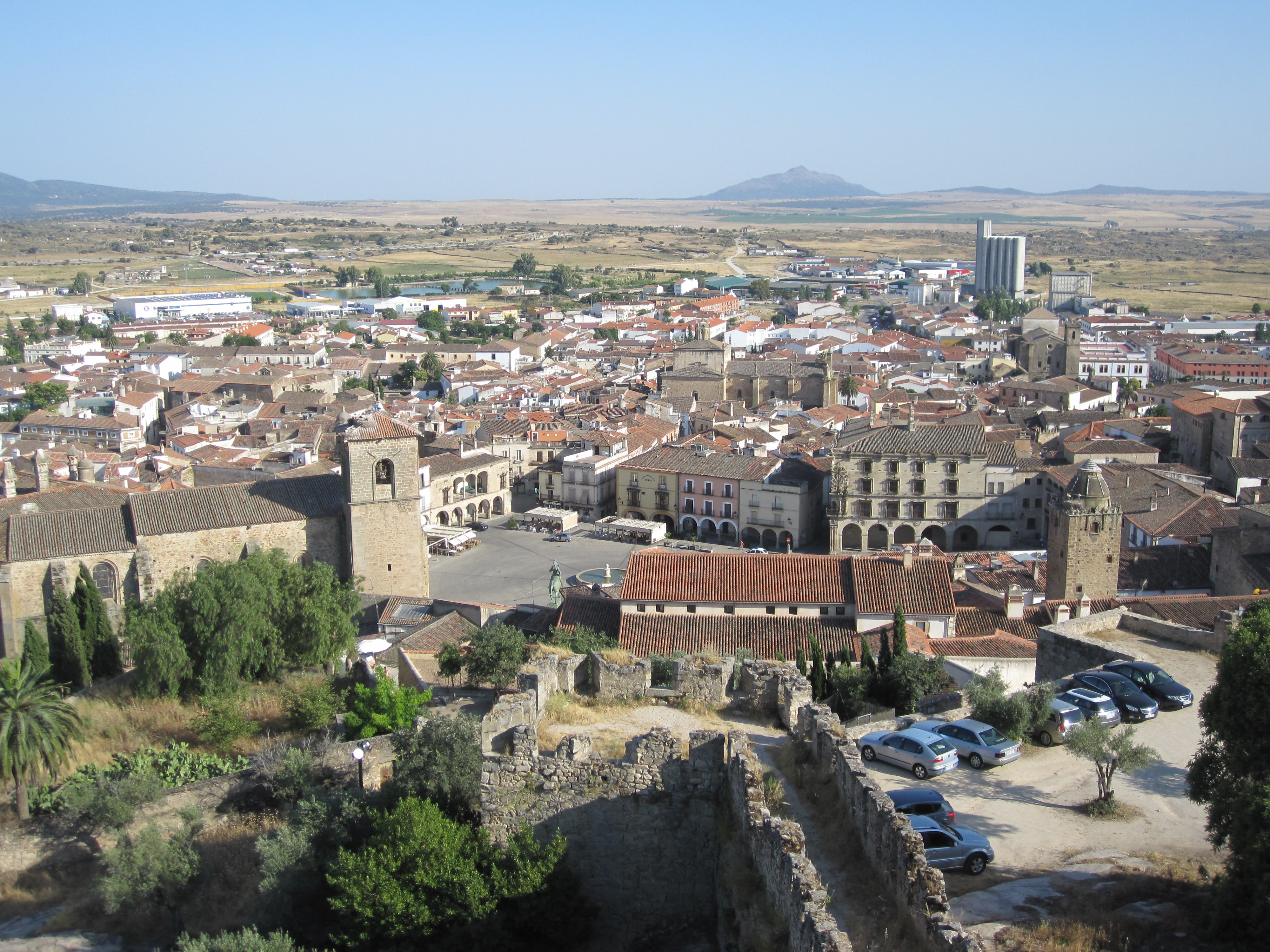
View of the center of town/Main square: “La Plaza Mayor”. This is where you can find several shops, restaurants with terraces so you can eat/drink right on the main square as you enjoy the antique view of the town. Also there is the famous statue of Francisco Pizarro, a conquistador who was born in Trujillo. He was part of the biggest fleet that left Spain in search of the “New World”. He was the founder of Lima, Peru.
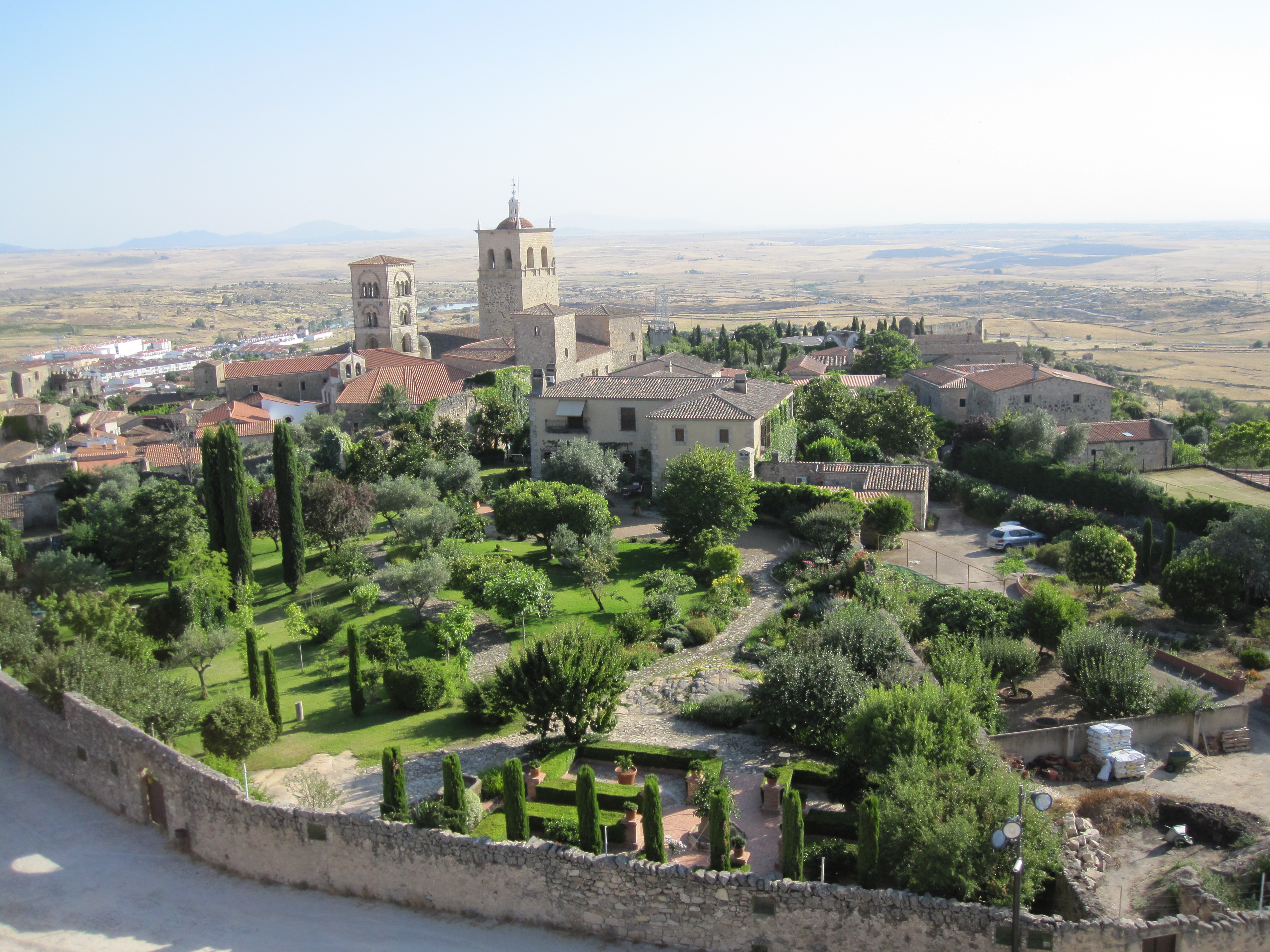
Below is the view of the Church Santa Maria la Mayor and the green gardens of one of the mansions owned by an American who decided to retire in Trujillo, and why not, Live like a KING!
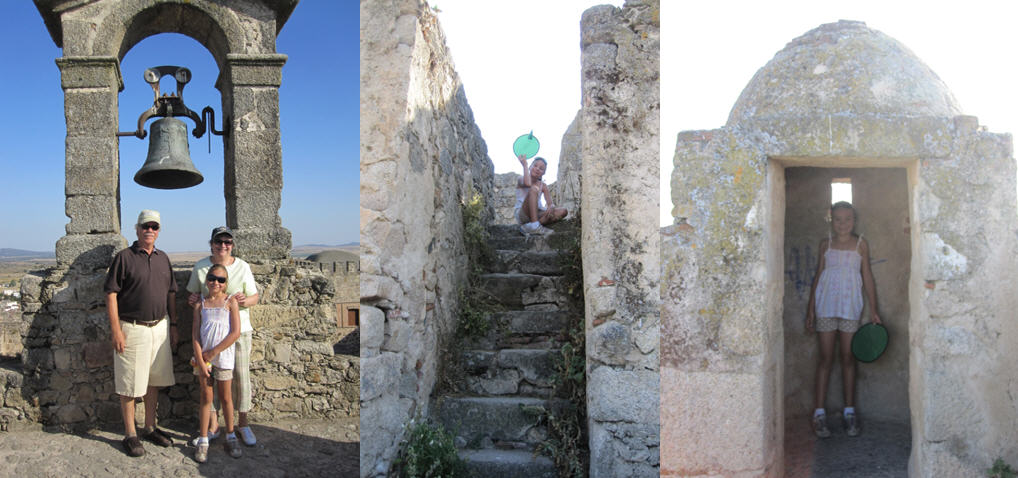
 My family enjoying the ups and downs of the castle.
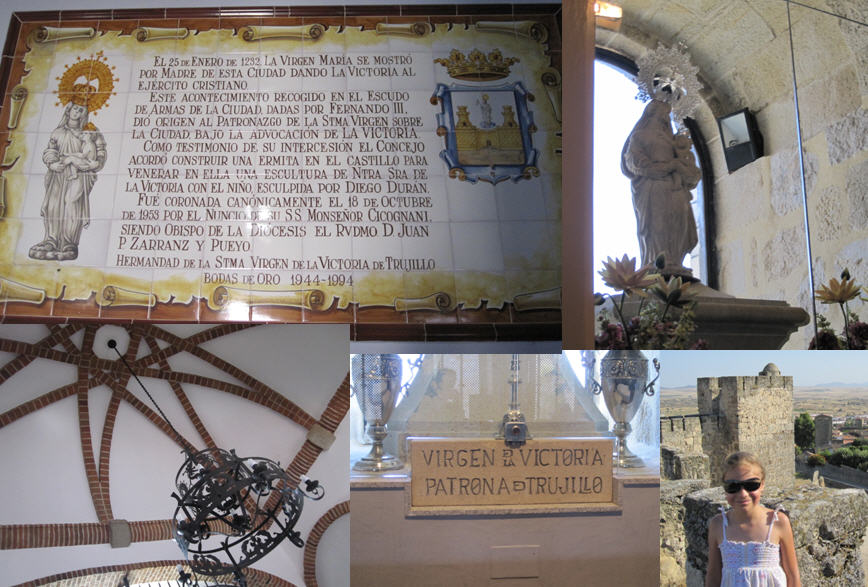
On the other side of the large patio you can go up to the chapel of the “Virgen de la Victoria” which is high up and looks out to the main square of Trujillo.
The Virgen de la Victoria looks after the Trujillanos as the story says: In the 1232 the Virgin Mary appeared in the town of Trujillo providing the strength to lead the Christians to victory over the Moors in that time. This is why she is called “La Virgen de la Victoria” – the Virgin of Victory. She is the Patron of the town of Trujillo which is why they built her chapel in the highest point so she can always look after the Trujillanos. In her honor they also have her in the emblem of Trujillo.
For a 50cent donation the Virgin statue which usually looks towards the main square turns and looks towards you. Most people do this when they say their prayers or when they do offerings to her.
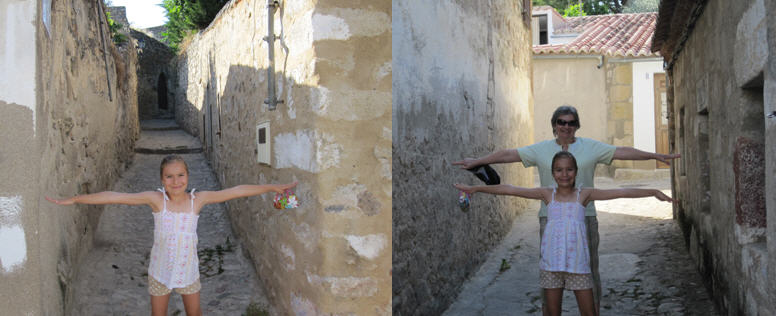
Now that we’ve seen everything there is to see in the castle, we head back into town. Going through little streets and discovering more tiny doors that Carolina loves to compare her height to. We get in the car and decide to go to the Main square for a drink and a tapa.
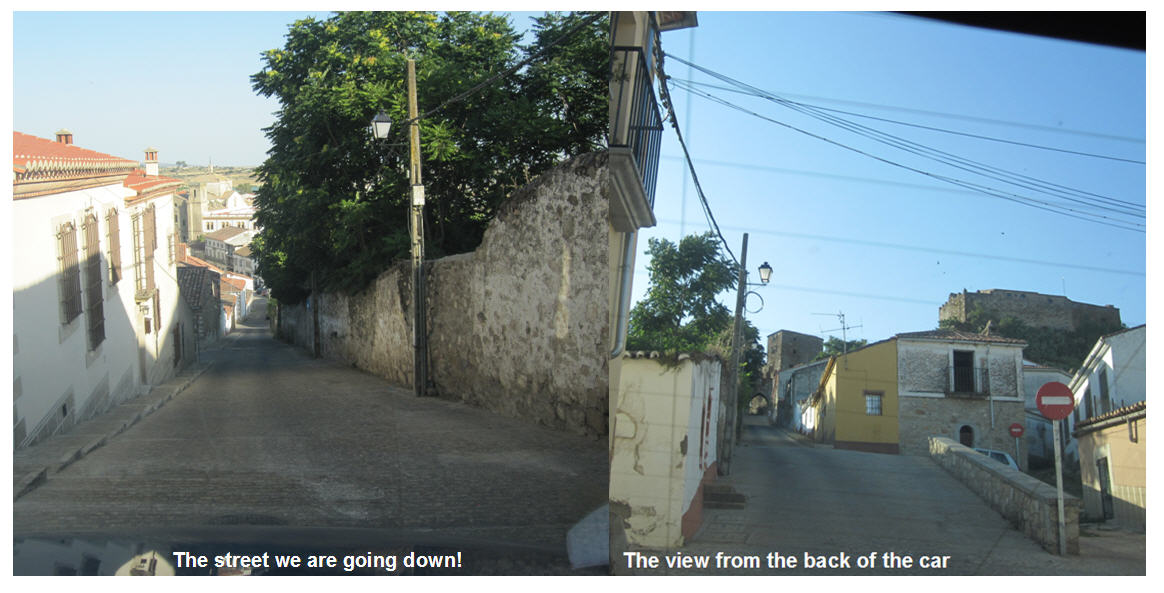
In order to get where we needed to go, we had to go down a really steep street (see photo), all I have to say is that I’m glad I didn’t have to walk up that street 😉
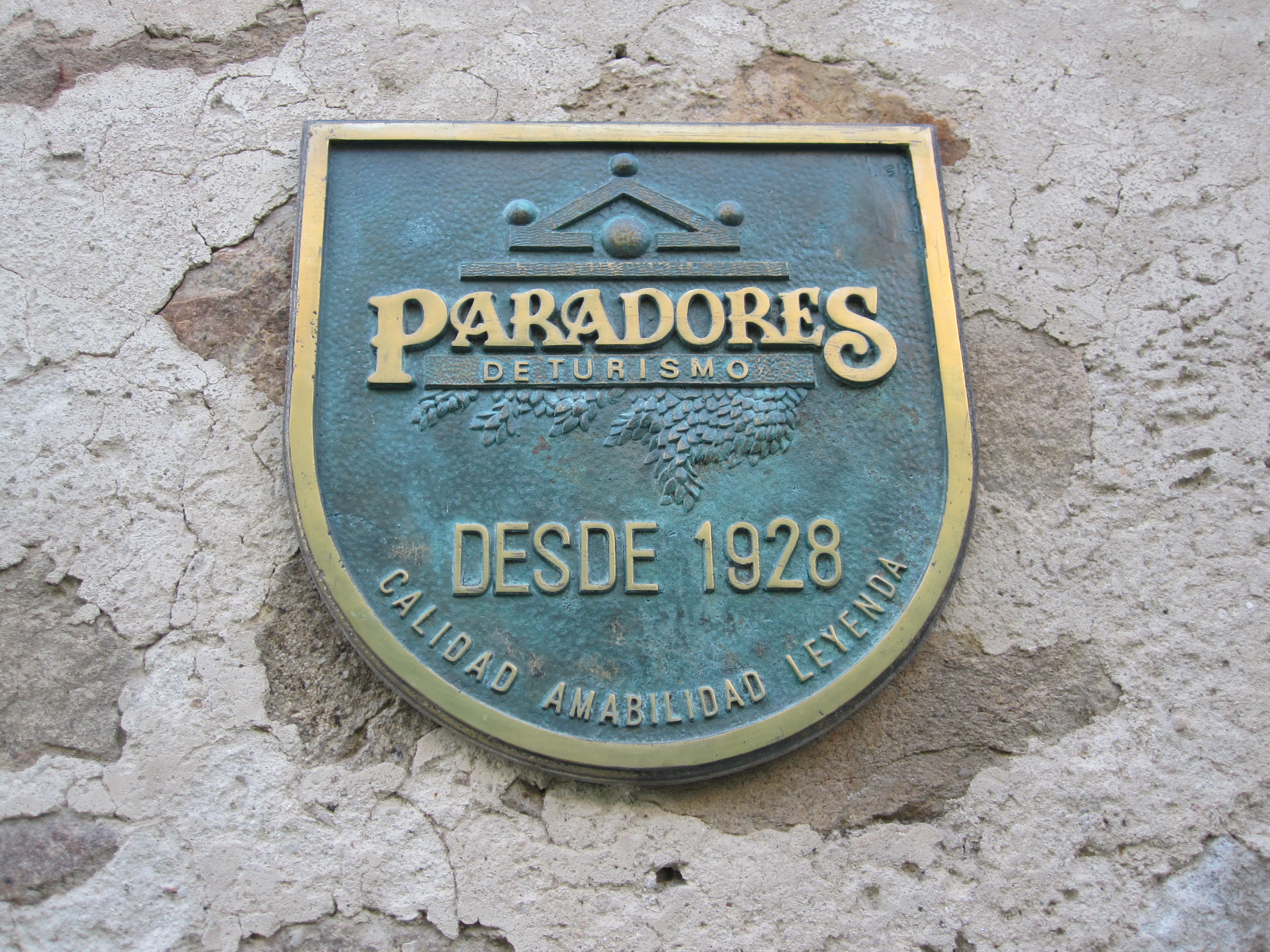 We stopped at the Parador de Turismo de Trujillo to have a drink and tapa.
For those that might not know… The Paradores are a group of Hotels that can be found all over Spain, the uniqueness of it is that they are all either mansions, Convents, monasteries and other historic buildings.
When you stay at a Parador you get to enjoy the artistic/arquitectural Spanish Heritage in what is considered to be top notch hotels.
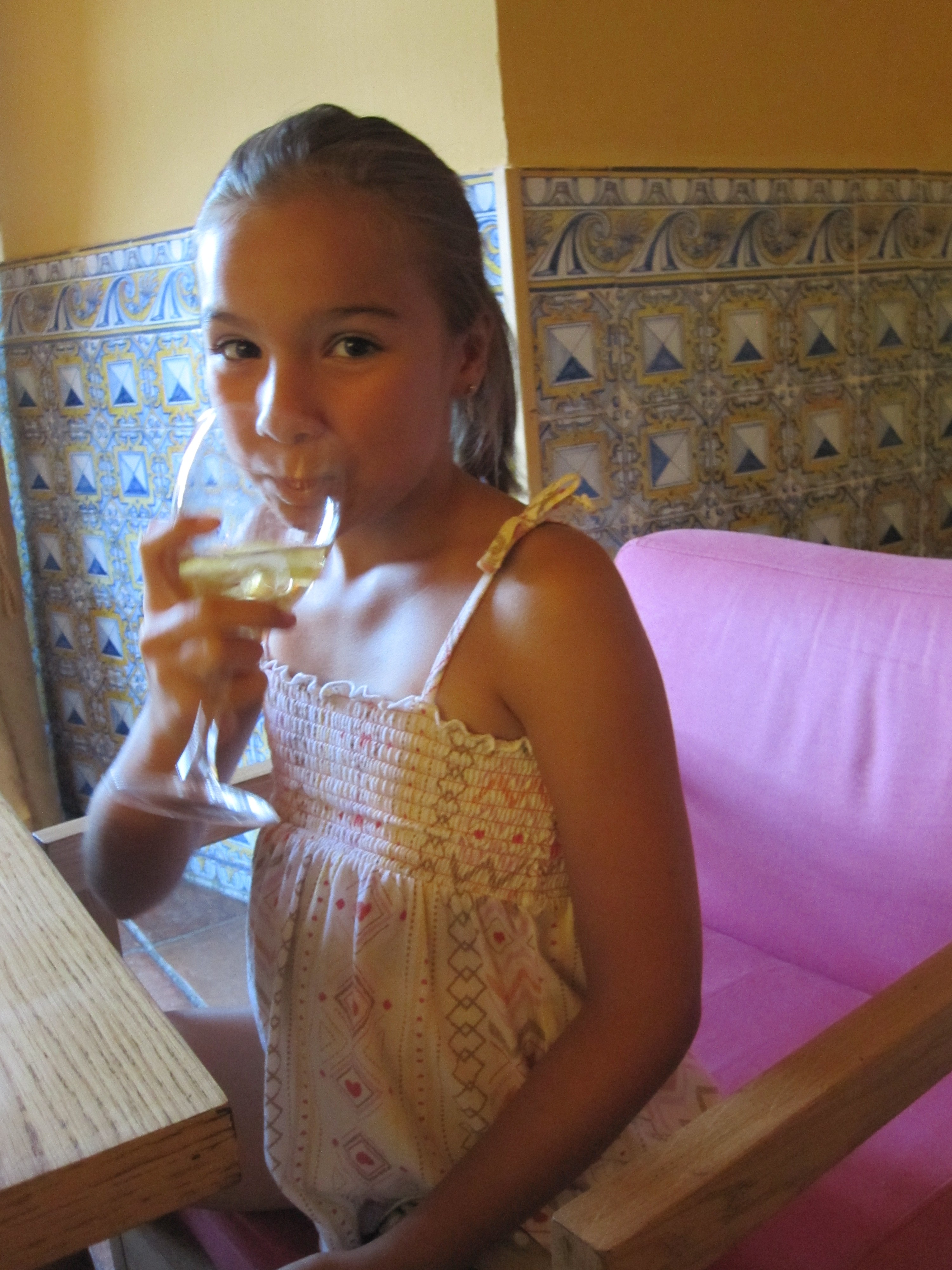
Last picture of the Trujillo adventure is Carolina sipping her Mosto -which is basically a non-alcoholic form of wine.
Delicious, I’d say it’s similar to drinking grape juice, but in flavor it just can’t compare!
PS: love the Spanish tile on the wall in the background of the photo!

 ccarretero

I feel like I just went a mini tour and you as my guide my friend. Thanks for sharing. I REALLY have to go back with you someday and enjoy all Spain has to offer. But until then, I will visit your blog 🙂
D
LikeLike
Thanks D! My hope was to make reader feel like they were experiencing it with me, so glad it worked for you 🙂 And yes sometime you’ll have to come to Spain, it would be a lot of fun!
LikeLike
A really good account of your visit to Trujillo. I visited in May and thought it one of the nicest places that I have visited anywhere.
LikeLike
Thanks for the comment! I’ve gone to Trujillo so many times as I was growing up, and each time we take friends and relatives when they visit us… and it never fails, somehow we always end up finding some new little corner and curiosity. Hope you enjoyed your time in Spain!
LikeLike